
Metatarsalgia Treatment
Metatarsalgia is a common condition that causes pain and inflammation in the ball of the foot. Our Manhattan foot and ankle specialists provide comprehensive evaluations and personalized treatment plans to reduce discomfort, improve mobility, and help patients return to their daily activities.
Expert Metatarsalgia Treatment in Manhattan
The ball of the foot absorbs significant pressure during standing, walking, running, and athletic activity. When excessive stress is placed on the metatarsal bones and surrounding tissues, it can lead to metatarsalgia, causing pain, tenderness, and difficulty with movement.
Whether symptoms develop from overuse, foot structure abnormalities, improper footwear, or underlying conditions, early treatment can help prevent chronic discomfort and further complications.
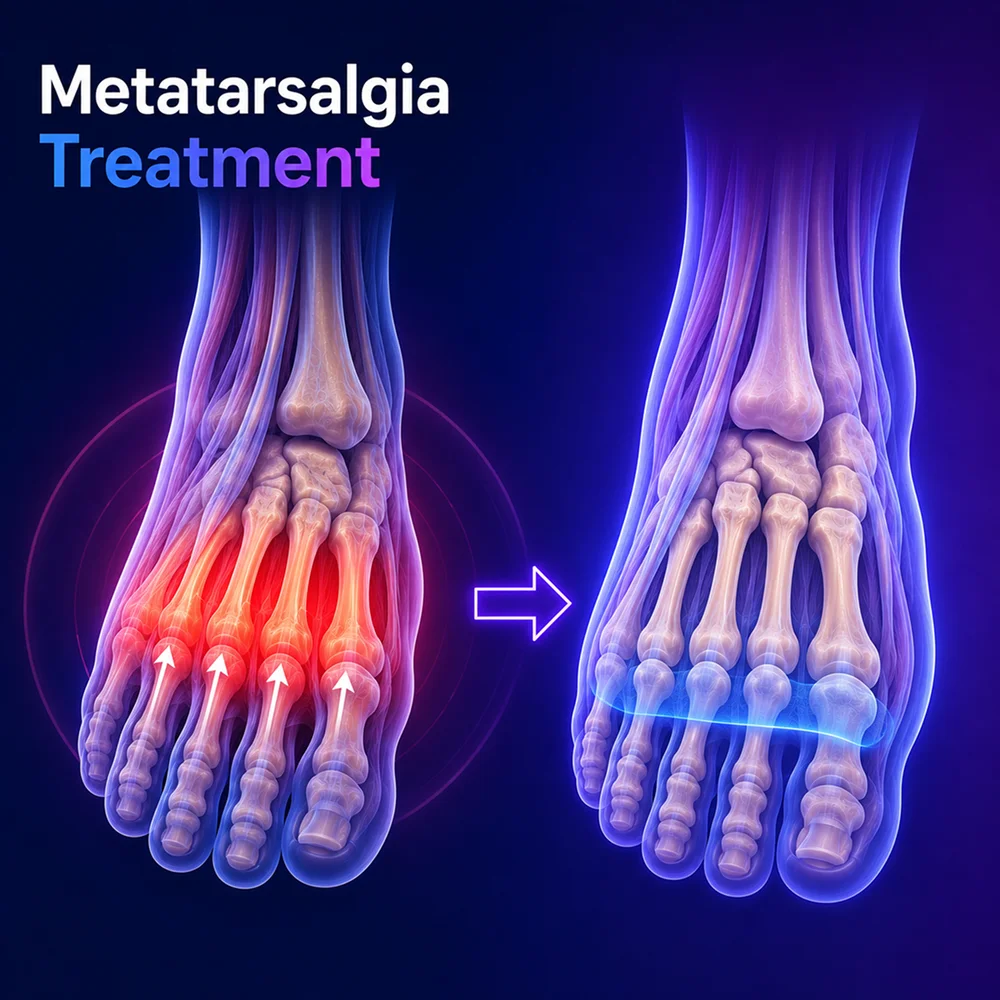
What Is Metatarsalgia?
Metatarsalgia is a condition that causes pain and inflammation in the ball of the foot. It is often associated with repetitive impact, improper footwear, and foot conditions such as Bunions and Flat Feet Treatment (Adults & Kids).
Common symptoms include aching, burning pain, tenderness, numbness, and discomfort that worsens with walking or physical activity.
Metatarsalgia Treatment Options
Treatment is customized based on the severity of symptoms and the underlying cause.
Options may include:
- Activity modification
- Footwear recommendations
- Orthotics
- Padding and offloading techniques
- Anti-inflammatory treatments
- Physical therapy and stretching exercises
- Extra-Corporeal Shockwave Therapy
- Platelet Rich Plasma Injections (PRP) when appropriate
- Surgical correction for persistent cases
Our goal is to reduce pressure on the forefoot, relieve pain, and restore normal function.

Benefits of Early Treatment
Addressing metatarsalgia early can help prevent worsening symptoms and improve overall foot function.
Benefits may include:
- Reduced pain and inflammation
- Improved walking comfort
- Better weight distribution across the foot
- Enhanced mobility
- Prevention of chronic forefoot pain
- Improved athletic performance
- Reduced risk of additional foot problems
Early treatment can also help address contributing conditions such as Bunions, Neuromas, and Flat Feet Treatment (Adults & Kids).
Why Choose Flex Foot & Ankle?
- Board-Certified Foot & Ankle Specialist
- Advanced diagnostic technology
- Personalized treatment plans
- Conservative and surgical treatment options
- Expertise in complex foot conditions
- Convenient Manhattan location
We focus on identifying the root cause of forefoot pain and creating effective treatment strategies designed to provide lasting relief.
Find Us in Manhattan
We proudly provide expert metatarsalgia treatment to patients throughout Manhattan and surrounding neighborhoods. Our centrally located office offers convenient access to advanced care for Neuromas, Bunions, Orthotics, Flat Feet Treatment (Adults & Kids), and other foot and ankle conditions affecting mobility and comfort.


 Trustindex verifies that the original source of the review is Google.
 Trustindex verifies that the original source of the review is Google.
 Trustindex verifies that the original source of the review is Google.
 Trustindex verifies that the original source of the review is Google.
 Trustindex verifies that the original source of the review is Google.
 Trustindex verifies that the original source of the review is Google.
 Trustindex verifies that the original source of the review is Google.
 Trustindex verifies that the original source of the review is Google.
 Trustindex verifies that the original source of the review is Google.
 Trustindex verifies that the original source of the review is Google.
Metatarsalgia Treatment FAQs
Have questions about metatarsalgia?
Here are some of the most common questions patients have about symptoms, treatment options, and recovery.
What causes metatarsalgia?
Metatarsalgia is commonly caused by excessive pressure on the ball of the foot due to high-impact activities, foot structure abnormalities, improper footwear, overuse, or conditions such as Bunions and Flat Feet.
Can metatarsalgia go away on its own?
Mild cases may improve with rest and activity modification. However, persistent symptoms should be evaluated to prevent ongoing pain and worsening foot problems.
Are orthotics helpful for metatarsalgia?
Yes. Orthotics can help redistribute pressure across the foot, improve alignment, and reduce stress on the metatarsal bones during walking and activity.
Is metatarsalgia the same as a neuroma?
No. While both conditions can cause forefoot pain, Neuromas involve irritation of a nerve, whereas metatarsalgia refers to inflammation and pain in the ball of the foot. A proper evaluation can determine the exact cause of symptoms.
Can I continue exercising with metatarsalgia?
Continuing high-impact activities may worsen symptoms. A specialist can recommend activity modifications and treatment options that support recovery while maintaining fitness.
When is surgery necessary?
Surgery is typically reserved for cases that do not respond to conservative treatments or when an underlying structural problem is contributing to the pain.

